



From drop testing to ESS, Kistler offers comprehensive measurement technology for consumer electronics product testing.

家電製品の試験

使いやすく、コストパフォーマンスに優れた測定技術

民生用電子機器(3C)市場は競争が激化しています。メーカー各社は、製品の品質、安全性、耐久性、信頼性、および性能を最高水準に保つことに注力しています。これらはすべて、ライフサイクルコストや品質コストの管理、顧客の信頼の構築、そしてブランドの評判維持にとって極めて重要です。輸送、保管、または使用中に、機械的、熱的、あるいは環境的な要因が製品に影響を及ぼす可能性があります。

リコールや保証請求は莫大なコストを伴います。したがって、民生用電子機器(3C製品)の保証仕様が日常的な使用環境下で確実に満たされていることを保証するためには、徹底的な製品試験の実施が不可欠です。

民生用電子機器業界における新技術、新素材、そして小型化への継続的な傾向は、製品が市場に投入される前に、設計者や製品試験のシナリオに新たな課題をもたらしています。
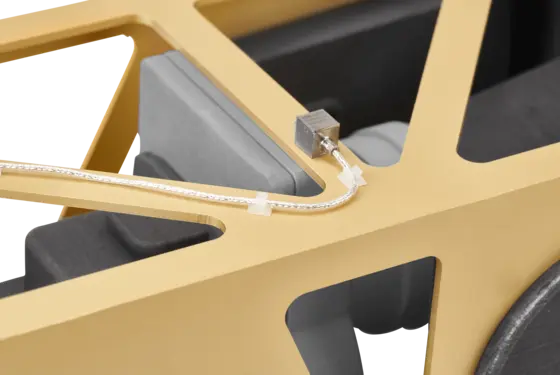
民生用電子機器の試験向けに、使いやすく、コストパフォーマンスに優れ、耐久性があり、信頼性の高い測定機器です。試験条件に応じた性能を発揮し、試験のニーズに合わせて校正されています。

キストラーの圧電センサー技術が、民生用電子機器の製品試験にもたらすメリット

Optimize resources

リソースを最適化する

  • 耐久性:過負荷保護機能と高温安定性を備え、長寿命
  • 耐久性に優れたコネクタとケーブル
  • コストパフォーマンスに優れる
  • 取り扱いが容易
Maximize efficiency

効率を最大化

  • 個々の試験要件に応じた校正
  • 高い測定精度
  • 試験サイクル時間の短縮
Process reliability

信頼性

  • 温度変動下でも長期にわたり安定した動作
  • 試験条件に準拠した性能

当社は、民生用電子機器の製品試験用途向けに検証済みの、校正済みの測定システム一式を開発・提供しています。設置や使用に関する専門知識とアドバイスを提供します。当社のソリューションは、コスト効率に優れているだけでなく、厳しい環境試験条件にも対応しています。

Impact testing and fast fracture testing of materials for 3C products with load cells featuring fast response time

Miniature piezoelectric 1-component load cells to perform impact testing and fast fracture testing on consumer electronics materials are distinguished by:

  • Longevity and survivability due to high overload capacity
  • Measuring accuracy based on extraordinarily high linearity 
  • Fast response time due to wide bandwidth 
  • Externally adjustable with our charge amplifiers (ex. 5018A, 5167A, 5073B) to optimize the measuring range for the application to best utilize the available dynamic range

母材試験とは何ですか?なぜ民生用電子機器に対して母材の機械的試験を行うのでしょうか?

材料の機械的試験には、衝撃試験、急速破壊靭性試験、疲労試験などが含まれます。これは、材料(金属、プラスチック、複合材料、ポリマー)に引張、圧縮、せん断などの物理的応力を加え、その特性や挙動を把握するためのプロセスです。得られたデータは、材料が特定の用途に適しているかどうかを判断するのに役立ち、また、材料の寿命や破損時期を予測するためにも利用できます。これは、現場で使用される民生用電子機器の故障の可能性に対処するための有効な手段です。

応答速度の速いダイナモメーターを用いた民生用電子機器の落下・衝撃試験

It is necessary to know the impact of force, acceleration and impact orientation when the product contacts the ground. The measurement of high impact forces requires sensors with high stiffness, linearity/low crosstalk errors of the sensor. We provide calibrated single and multicomponent force sensor and accelerometer solutions for precise measurement. Piezoelectric sensors offer considerable advantages over strain gauge sensors that are commonly also used for impact testing. 

Unsurpassed precision, long life, wide bandwidth/ fast response time, long-term operational stability, reliability and easy handling during demanding drop testing / impact testing procedures make piezoelectric load cells from Kistler the preferred choice. 

Piezoelectric dynamometers to perform drop/impact testing on consumer electronics are typically composed of piezoelectric load cells, featuring:

  • Longevity and survivability due to high overload capacity 
  • Measuring accuracy based on extraordinarily high linearity 
  • Much higher frequency response of force plate for fast response time (compared to strain gauge technology) thanks to high stiffness 
  • Externally rangeable with a charge amplifier (e. g. 5018A, 5167A) to optimize the measuring range for the application to best utilize the available dynamic range

You can choose from:

  • Multicomponent dynamometers directly off the shelf
  • Load cells to build your single and 3-component dynamometers on your own 
    • 1-component load cells 
    • 1-component load cell assembly sets with integrated load cells (93x1)
  • Custom Product Lane (CPL), the special Kistler service for tailor-made dynamometers and other measurement equipment

As time duration and frequency are inversely proportional, the dynamometer force plate needs to be designed so that the natural frequency is at least 3 to 5 times higher than the expected frequency content of the drop test.

Piezoelectric accelerometer to perform drop/impact testing on consumer electronics (3C products):

World's smallest miniature triaxial IEPE accelerometer (low mass: 6 mm ( 0.236”) cube, 0.9 gram sensor mass with low mass/flexible cable (1.2 mm OD, 3.2 gram/m) can be mounted to very small test units.

What is drop testing? Why is it important to perform drop testing on consumer electronic products (3C products)?

Protection against damages caused by the impact forces loaded through dropping is an important concern for the design of wearable or portable consumer electronic products. The damage may include cracking of the screen, break in the device or severe functional damage.

The purpose of drop testing is to validate the design goals and workmanship based on possible operational scenarios to verify durability. It addresses the handling survivability of products and encompasses various testing scenarios including transportation (shipment via train, plane, ship, car). 

Drop testing also validates analytical models which are also used during the development of consumer electronics. Analytical models allow to cost-effectively evaluate designs without testing prior to prototyping which saves costs and supports faster 3C product time to market and satisfying price point requirements. 

How to perform a drop test on a consumer electronics device – testing scenario

Typically, a drop tower comprised of a platform for drop-off on top and a force dynamometer at the bottom is applied. Eventually, a triaxial accelerometer is to be mounted on the unit under test as well.

Drop a 3C consumer electronics device (laptop, smartphone, tablet) without external packaging from various heights and orientations on the dynamometer force plate to measure the impact force. Compare performance to the intended design goals and evaluate the test unit for damage. 

Packaging testing /drop integrity testing /dynamic impact testing of consumer electronics with miniature triaxial IEPE and triaxial MEMS capacitive accelerometers with high bandwidth

The small size and low weight of our accelerometers allow for flexible sensor mounting including mounting them to inside packages, onto or even inside actual products under test. MEMS accelerometers allow the measurement of free fall conditions prior to impact as well as full characterization of the actual impact event. 

Miniature triaxial IEPE and triaxial MEMS capacitive accelerometers to perform packaging testing on consumer electronics are optimized for low frequency measurement with dynamic measurement capabilities, featuring:

  • Longevity and survivability due to high overload capacity 
  • Measuring accuracy based on extraordinarily high linearity 
  • Suitability to measure long or short duration impacts which resonant frequencies well above the signal bandwidth requirements due to high bandwidth 
  • Calibration according to ISO 17025 to accomplish precision measurement and related uncertainties

Accelerometer for drop testing of 3C products:

World's smallest miniature triaxial IEPE accelerometer (low mass: 6 mm ( 0.236”) cube, 0.9 gram sensor mass with low mass/flexible cable (1.2 mm OD, 3.2 gram/m) can be mounted to very small test units.

What is packaging testing? Why should packaging testing be performed for consumer electronic devices?

Packaging testing assesses how a package and its contents react to impacts during shipping and handling. The test helps manufacturers address design flaws, improve durability, minimize product damage, loss, and associated costs, avoid over-packaging, which is more expensive for businesses, avoid under-packaging, which endangers goods resulting in higher costs due to the destruction of products during transportation. The test can also help determine the survivability of a product's packaging and indicates structural and mechanical weaknesses not necessarily detected in shock and vibration tests.

ESS, HASS and HALT testing of consumer electronics products with PiezoStar single axis and triaxial accelerometers

HALT and HASS testing requires accelerometers featuring extreme temperature stability. Applications apply control and response accelerometers. Control accelerometers are used to monitor the input vibration to the test article and are typically single axis accelerometers. Response accelerometers measure the vibration of the test article as a result of the input vibration and are triaxial.

PiezoStar single axis and triaxial accelerometers for ESS, HASS and HALT testing, featuring: 

  • Ultra-low temperature sensivity
  • Long-term stability at extended temperatures
  • Stable operation with dynamic temperature and transients; transition rates of up to 60 °C (160 °F) per minute, with extremes of –100 °C to 200 °C (–212 °F to 392 °F)
  • Low mass to prevent mass loading into lightweight structures
  • Response accelerometers support up to 2KHz and upper end of 10KHz of measurement
  • Lower frequency calibration aligned with the product test program
  • Durable connectors and cabling that withstand the testing levels and long duration testing

What is environmental stress screening (ESS, HASS, HALT)? Why perform environmental stress screening on consumer electronic devices?

Environmental stress screening (ESS) involves applying stresses to a product until it fails. A combination of Highly Accelerated Life Testing (HALT) and Highly Accelerated Stress Screening (HASS), as part of the ESS testing methods, improves product reliability by early detection of such failure mechanisms, helping to reduce repair or replacement costs. ESS is an effective means to address the possibility of failures of a consumer electronic device in the field.

ESS measuring chains utilize control accelerometers, response accelerometers, data acquisition systems, signal conditioning, climatic chambers, shakers and controllers. The testing process usually takes 3 to 5 days. It comprises several stages where the unit under test (UUT) is exposed to conditions such as:

  • Periodic vibration, random vibration and shock
  • Temperature dwells and cycling
  • Combinations of thermal and vibration stresses

相談が必要ですか?

Any special requirements you cannot meet with standard applications? Exotic profiles are our specialty. Contact us and we will surely find a solution!

Featured products