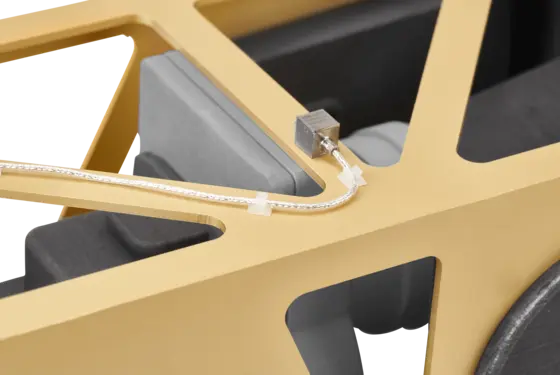



From drop testing to ESS, Kistler offers comprehensive measurement technology for consumer electronics product testing.

消费类电子产品测试

易于使用且经济实惠的测量技术

消费电子(3C)市场竞争异常激烈。制造商们都致力于确保产品具备卓越的质量、安全性、耐用性、可靠性和性能。这一切对于控制生命周期成本和质量成本、建立客户信任以及维护品牌声誉都至关重要。在运输、存储或使用过程中,机械、热或气候条件都可能对产品造成影响。

产品召回和保修索赔的成本极高。因此,对消费电子产品进行全面的测试至关重要,以确保消费电子设备(3C产品)在日常使用中能够满足其承诺的产品规格。

消费电子行业的新技术、新材料以及持续的微型化趋势,给设计师带来了新的挑战,也对产品上市前的测试方案提出了新的要求。

一款易于使用、经济实惠、经久耐用且可靠的消费电子产品测试仪器,其性能与测试条件相匹配,并根据测试需求进行了校准

基斯勒压电传感器技术在消费电子产品测试中的优势

Optimize resources

优化资源

  • 耐用性:使用寿命长,具备过载保护和高温稳定性
  • 耐用的连接器和线缆
  • 性价比高
  • 易于操作
Maximize efficiency

最大限度地提高效率

  • 根据具体测试要求进行校准
  • 高测量精度
  • 缩短测试周期
Process reliability

可靠性

  • 在动态温度条件下长期稳定运行
  • 性能符合测试条件

我们开发并提供经过全面校准且经过验证的完整测量链,专用于消费类电子产品的测试应用。我们提供应用方面的专业知识,并就安装和使用提供建议。我们的解决方案既经济实惠,又能满足严苛的环境测试条件。

Impact testing and fast fracture testing of materials for 3C products with load cells featuring fast response time

Miniature piezoelectric 1-component load cells to perform impact testing and fast fracture testing on consumer electronics materials are distinguished by:

  • Longevity and survivability due to high overload capacity
  • Measuring accuracy based on extraordinarily high linearity 
  • Fast response time due to wide bandwidth 
  • Externally adjustable with our charge amplifiers (ex. 5018A, 5167A, 5073B) to optimize the measuring range for the application to best utilize the available dynamic range

什么是基材测试?为何要对消费类电子产品进行基材力学测试?

材料的力学测试包括冲击试验、瞬态断裂韧性试验、疲劳试验等。该过程涉及将材料(金属、塑料、复合材料、聚合物)置于拉伸、压缩、剪切等物理应力之下,以了解其性能和行为。所得数据有助于判断材料是否适合特定应用,也可用于预测材料的寿命及其可能失效的时间。这是应对消费类电子设备在实际使用中可能发生故障的有效手段。

利用响应速度快的测力计对消费类电子设备进行跌落/冲击测试

It is necessary to know the impact of force, acceleration and impact orientation when the product contacts the ground. The measurement of high impact forces requires sensors with high stiffness, linearity/low crosstalk errors of the sensor. We provide calibrated single and multicomponent force sensor and accelerometer solutions for precise measurement. Piezoelectric sensors offer considerable advantages over strain gauge sensors that are commonly also used for impact testing. 

Unsurpassed precision, long life, wide bandwidth/ fast response time, long-term operational stability, reliability and easy handling during demanding drop testing / impact testing procedures make piezoelectric load cells from Kistler the preferred choice. 

Piezoelectric dynamometers to perform drop/impact testing on consumer electronics are typically composed of piezoelectric load cells, featuring:

  • Longevity and survivability due to high overload capacity 
  • Measuring accuracy based on extraordinarily high linearity 
  • Much higher frequency response of force plate for fast response time (compared to strain gauge technology) thanks to high stiffness 
  • Externally rangeable with a charge amplifier (e. g. 5018A, 5167A) to optimize the measuring range for the application to best utilize the available dynamic range

You can choose from:

  • Multicomponent dynamometers directly off the shelf
  • Load cells to build your single and 3-component dynamometers on your own 
    • 1-component load cells 
    • 1-component load cell assembly sets with integrated load cells (93x1)
  • Custom Product Lane (CPL), the special Kistler service for tailor-made dynamometers and other measurement equipment

As time duration and frequency are inversely proportional, the dynamometer force plate needs to be designed so that the natural frequency is at least 3 to 5 times higher than the expected frequency content of the drop test.

Piezoelectric accelerometer to perform drop/impact testing on consumer electronics (3C products):

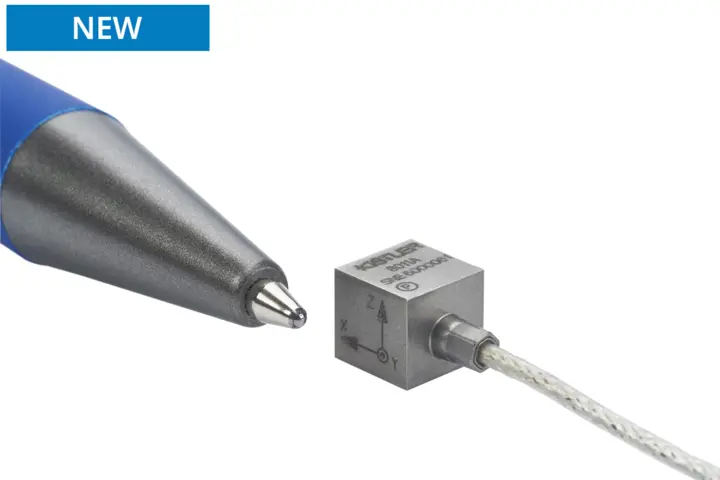
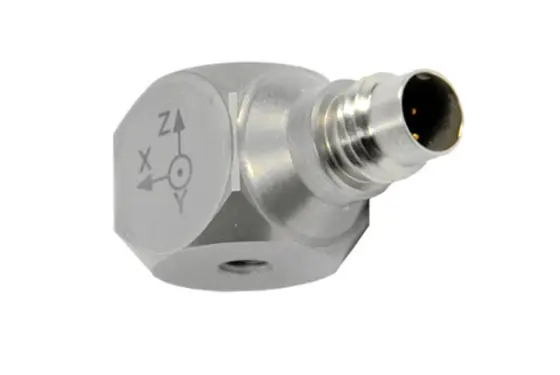
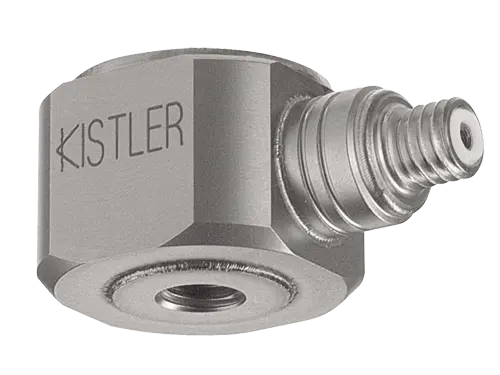
World's smallest miniature triaxial IEPE accelerometer (low mass: 6 mm ( 0.236”) cube, 0.9 gram sensor mass with low mass/flexible cable (1.2 mm OD, 3.2 gram/m) can be mounted to very small test units.

What is drop testing? Why is it important to perform drop testing on consumer electronic products (3C products)?

Protection against damages caused by the impact forces loaded through dropping is an important concern for the design of wearable or portable consumer electronic products. The damage may include cracking of the screen, break in the device or severe functional damage.

The purpose of drop testing is to validate the design goals and workmanship based on possible operational scenarios to verify durability. It addresses the handling survivability of products and encompasses various testing scenarios including transportation (shipment via train, plane, ship, car). 

Drop testing also validates analytical models which are also used during the development of consumer electronics. Analytical models allow to cost-effectively evaluate designs without testing prior to prototyping which saves costs and supports faster 3C product time to market and satisfying price point requirements. 

How to perform a drop test on a consumer electronics device – testing scenario

Typically, a drop tower comprised of a platform for drop-off on top and a force dynamometer at the bottom is applied. Eventually, a triaxial accelerometer is to be mounted on the unit under test as well.

Drop a 3C consumer electronics device (laptop, smartphone, tablet) without external packaging from various heights and orientations on the dynamometer force plate to measure the impact force. Compare performance to the intended design goals and evaluate the test unit for damage. 

Packaging testing /drop integrity testing /dynamic impact testing of consumer electronics with miniature triaxial IEPE and triaxial MEMS capacitive accelerometers with high bandwidth

The small size and low weight of our accelerometers allow for flexible sensor mounting including mounting them to inside packages, onto or even inside actual products under test. MEMS accelerometers allow the measurement of free fall conditions prior to impact as well as full characterization of the actual impact event. 

Miniature triaxial IEPE and triaxial MEMS capacitive accelerometers to perform packaging testing on consumer electronics are optimized for low frequency measurement with dynamic measurement capabilities, featuring:

  • Longevity and survivability due to high overload capacity 
  • Measuring accuracy based on extraordinarily high linearity 
  • Suitability to measure long or short duration impacts which resonant frequencies well above the signal bandwidth requirements due to high bandwidth 
  • Calibration according to ISO 17025 to accomplish precision measurement and related uncertainties

Accelerometer for drop testing of 3C products:

World's smallest miniature triaxial IEPE accelerometer (low mass: 6 mm ( 0.236”) cube, 0.9 gram sensor mass with low mass/flexible cable (1.2 mm OD, 3.2 gram/m) can be mounted to very small test units.

What is packaging testing? Why should packaging testing be performed for consumer electronic devices?

Packaging testing assesses how a package and its contents react to impacts during shipping and handling. The test helps manufacturers address design flaws, improve durability, minimize product damage, loss, and associated costs, avoid over-packaging, which is more expensive for businesses, avoid under-packaging, which endangers goods resulting in higher costs due to the destruction of products during transportation. The test can also help determine the survivability of a product's packaging and indicates structural and mechanical weaknesses not necessarily detected in shock and vibration tests.

ESS, HASS and HALT testing of consumer electronics products with PiezoStar single axis and triaxial accelerometers

HALT and HASS testing requires accelerometers featuring extreme temperature stability. Applications apply control and response accelerometers. Control accelerometers are used to monitor the input vibration to the test article and are typically single axis accelerometers. Response accelerometers measure the vibration of the test article as a result of the input vibration and are triaxial.

PiezoStar single axis and triaxial accelerometers for ESS, HASS and HALT testing, featuring: 

  • Ultra-low temperature sensivity
  • Long-term stability at extended temperatures
  • Stable operation with dynamic temperature and transients; transition rates of up to 60 °C (160 °F) per minute, with extremes of –100 °C to 200 °C (–212 °F to 392 °F)
  • Low mass to prevent mass loading into lightweight structures
  • Response accelerometers support up to 2KHz and upper end of 10KHz of measurement
  • Lower frequency calibration aligned with the product test program
  • Durable connectors and cabling that withstand the testing levels and long duration testing

What is environmental stress screening (ESS, HASS, HALT)? Why perform environmental stress screening on consumer electronic devices?

Environmental stress screening (ESS) involves applying stresses to a product until it fails. A combination of Highly Accelerated Life Testing (HALT) and Highly Accelerated Stress Screening (HASS), as part of the ESS testing methods, improves product reliability by early detection of such failure mechanisms, helping to reduce repair or replacement costs. ESS is an effective means to address the possibility of failures of a consumer electronic device in the field.

ESS measuring chains utilize control accelerometers, response accelerometers, data acquisition systems, signal conditioning, climatic chambers, shakers and controllers. The testing process usually takes 3 to 5 days. It comprises several stages where the unit under test (UUT) is exposed to conditions such as:

  • Periodic vibration, random vibration and shock
  • Temperature dwells and cycling
  • Combinations of thermal and vibration stresses

需要咨询?

Any special requirements you cannot meet with standard applications? Exotic profiles are our specialty. Contact us and we will surely find a solution!

Featured products