EPFL PTMH opts for Kistler pressure sensors to conduct R&D model tests on hydraulic turbines


The Technology Platform for Hydraulic Machines (PTMH) at École Polytechnique Fédérale de Lausanne (EPFL) conducts model tests on new hydraulic turbines in accordance with IEC 60193. Turbines of various types – including Kaplan, Francis, propeller, bulb and pump turbine models – are tested using IEPE pressure sensors from Kistler. They capture pressure pulsations with high precision, thus playing a critical role in optimizing turbine design.

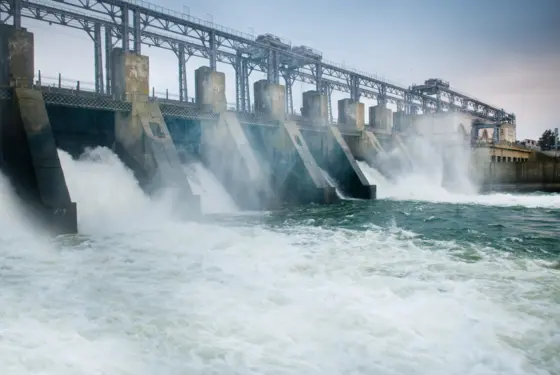
While discussions of the energy transition often focus on wind and solar power, hydropower is also a significant player on the global stage. In 2024, hydropower contributed around 4,400 terawatt hours (TWh) to worldwide electricity generation with a 14 percent share of the total, placing it third behind coal and natural gas. What’s more, estimates suggest hydropower’s global potential could exceed 16,000 TWh annually – even considering ecological factors such as the impact of dams on landscapes and ecosystems. Hydropower also offers flexibility and huge energy storage capacity which are critical assets for balancing a grid with an increasing share of renewables.

Electricity is generated in a hydropower plant by turbines that convert the potential energy of falling and the kinetic energy of flowing water into electrical energy. There are several types of hydraulic turbine design, each with their own specific strengths: the most common types include pump turbines, Francis, and Kaplan, named for their respective inventors. Given the high investment costs and because of the individual conditions at each hydropower plant, planned turbines must undergo intensive model acceptance testing before installation. Turbine test stands utilize accurately scaled models of hydraulic water passages to capture parameters such as pressure pulsations, cavitation, efficiency and output power
Robust, high-precision measurements thanks to PiezoStar crystals

The Kistler Group is not only an expert in piezoelectric measurement technology: it also grows its own PiezoStar crystals, which offer superior properties compared to standard quartz crystals. Key advantages include:

  • Higher sensitivity
  • Superior temperature stability
  • High-temperature resistance up to 700°C (up to 1,000°C for short periods)

Depending on the application area, Kistler develops customized PiezoStar crystals with tailored properties for specific sensors.

IEPE pressure sensors accurately measure pressure pulsations

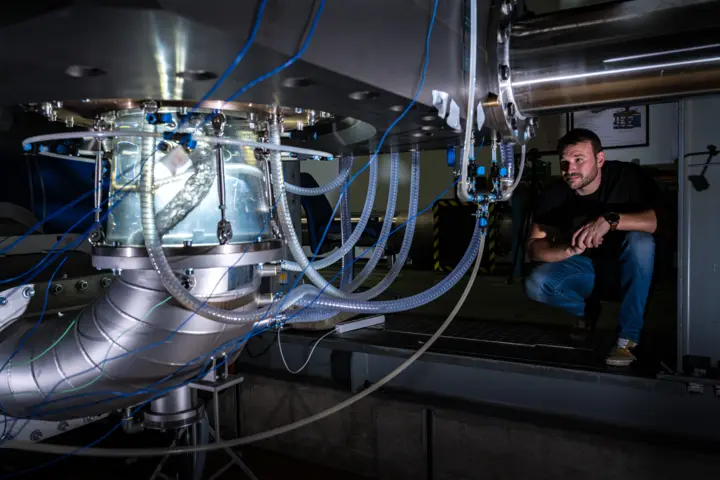
As a research facility specializing in hydraulic turbine testing, PTMH serves industrial customers worldwide. Its laboratory is part of École Polytechnique Fédérale de Lausanne, located on the shores of Lake Geneva. Alongside its academic research and teaching activities, PTMH operates three different turbine test stands for hydraulic turbines, storage pumps and pump turbine testing in compliance with IEC 60193. These strictly controlled model acceptance tests are intended to validate the turbines’ hydraulic power, thus ensuring that they meet the contractually agreed performance values – given that hydropower turbines have lifespans of 60 years or more.

Pressure pulsations occur in Francis, Kaplan, propeller, bulb and pump turbines, where they are caused by the flow and design cavities. These pulsations are influenced by many parameters and, when intense, can reduce performance or even damage the turbine. If pressure pulsations of this sort occur on the turbine test stand, structural countermeasures must be implemented to ensure the turbine’s stability during operation. PTMH uses IEPE (Integrated Electronics Piezo-Electric) pressure sensors from Kistler for all types of reduced-scale model tests in research and development. These measurement parameters are of particular interest here:

  • Relative amplitude of pressure pulsations within the specified operating range
  • Nature of pressure pulsations (periodic vs. stochastic)
  • Dominant frequency of pressure pulsations
  • Effectiveness and positioning of mitigating interventions such as air injection
  • Intensity of pulsations in the test model compared to other models with similar speeds

PTMH turbine test stands equipped with Kistler measurement technology

As part of a comprehensive upgrade of the control center at PTMH, the hydraulic turbine test stands have been equipped with advanced pressure measurement systems from Kistler. The measuring chain is based on Kistler’s tried-and-tested 601C IEPE pressure sensors. These miniature piezoelectric pressure transducers feature PiezoStar crystals and built-in impedance converter technology (IEPE) that converts charges into voltage signals. They combine very compact design with outstanding sensitivity, and their high natural frequencies and fast response times are also decisive advantages for pressure pulsation measurements. And last but not least: pressure sensors in Kistler’s 601C series are equipped with an optimized sensor membrane designed for dynamic pressure measurements and insensitivity to thermal shock.

Waterproof cables that withstand the demanding hydrodynamic conditions in the hydraulic turbine environment are also indispensable elements of the measuring chain for PTMH: The 1983AD high-insulation connection cables from Kistler come with waterproof connectors to ensure an IP68 protection rating. For data acquisition, PTMH opted for LabAmp – the digital laboratory charge amplifier from Kistler that offers an impressive range of DAQ features and options as well as compatibility with LabVIEW, the coding environment used at PTMH to develop a proprietary data analysis software.

Valuable partnership for hydropower research and development

PTMH emphasizes the importance of precision in pressure pulsation analysis: “We chose Kistler measurement technology because their IEPE pressure sensors measure pressure pulsations precisely – and what’s more, the DAQ devices can be used with LabVIEW without any problems. We also appreciate the fast recalibration service as well as the comprehensive advisory support and assistance Kistler has provided throughout this multi-year project phase.”

Supported by these cutting-edge technologies, PTMH ensures maximum measurement accuracy and is a key player in driving advancements in hydropower research and industrial applications. These superbly equipped test stands reinforce PTMH’s position as a global research leader while also providing world-class testing services for the hydropower industry. The investments in hydraulic turbine test stands described above guarantee precise measurements and high reliability, enabling the institute to continue advancing its research, education, and testing services at the forefront of the sector.

Learn more about

Downloads