

Real-Time Release Testing in medical injection molding

Medrelease Suite

Contact us today

Kistler MedRelease Suite: A structured path to Real-Time Release Testing for plastic injection molded medical parts

 
Medtech industry plastic parts must adhere to high standards
Eliminating statistical blind spots

Until now, medical plastic injection molding has relied on Statistical Process Control (SPC) for batch release. However, this does not verify the quality of every individual part, leaving inherent statistical blind spots that limit release confidence. 

As regulatory expectations and traceability requirements continue to rise, the Kistler MedRelease Suite helps Original Equipment Manufacturers (OEMs) and Contract Manufacturing Organizations (CMOs) eliminate these statistical blind spots and transition step by step to auditable per part release confidence through Real-Time Release Testing (RTRT).
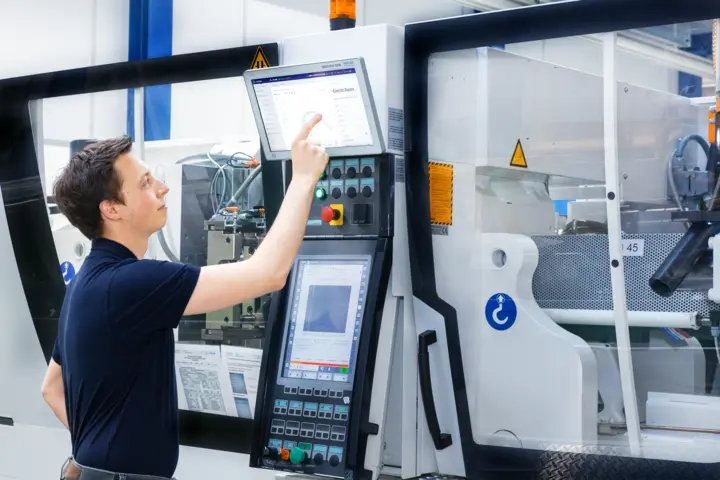


What is Real-Time Release Testing (RTRT)?

RTRT is a quality assurance approach that enables medical CMOs and OEMs to evaluate the quality of every  manufactured part in process instead of relying on post-production inspection, such as SPC.

Already established in pharmaceutical manufacturing, RTRT is now becoming a reality for medical plastic injection molding. This means that manufacturers can move from the current SPC-based quality control toward auditable per-part quality evidence, enabled by RTRT. This helps medical OEMs and CMOs meet increasing regulatory expectations while improving production efficiency and confidence in every release decision.

Benefits of Real-Time Release Testing

  • Per-part quality confidence instead of statistical sampling
  • Auditable traceability for every manufactured part
  • Reduced physical measurement effort 
  • Faster batch release through automated, in-process quality determination
  • Reduction or elimination of restricted warehouses

Cavity pressure monitoring with ComoNeo by Kistler makes easy work of process monitoring and quality assurance for injection molding
Kistler MedRelease Suite

The Kistler MedRelease Suite was developed to help medical OEMs and
CMOs successfully transition from SPC to RTRT. It integrates industry-leading cavity pressure measurement solutions, intelligent software, data management, and implementation expertise into one complete solution.

Together, these elements guide OEMs and CMOs in achieving auditable per-part quality confidence, reducing the statistical blind spots of SPC, accelerating release readiness, as well as strengthening traceability and compliance. 


Main benefits for medical OEMs

Full release confidence

Auditable per-part quality release

Supplier quality visibility

Guided implementation across supplier network

Main benefits for medical CMO

Faster release readiness through in-process quality control

Scalable process repeatability

Stronger OEM confidence

Guided implementation support

The five building blocks of the Kistler MedRelease Suite

Sensors products icon

Cavity pressure measurement

A comprehensive portfolio of high-precision cavity pressure sensors that measure directly where each part is formed, delivering the quality-relevant data for RTRT.

Real-time process monitoring

Real-time quality assessment

Integrated technologies for real-time process monitoring and model based quality determination.

Database for process and quality data

Data acquisition and documentation

Collection and documentation of per-part process and quality data for traceability, audits and quality investigations.

Global network

OEM-level data management and reporting

Enterprise analytics technology for comparing, analyzing, and optimizing process and quality data across manufacturing operations. 

Expertise icon

End-to-end implementation expertise

End-to-end implementation expertise that combines application know-how, validation, training, and hands-on support to successfully qualify, validate and scale RTRT throughout the supply network.


What makes cavity pressure the most accurate indicator of part quality?

Kistler’s RTRT approach is built on industry-leading cavity pressure measurement technology. Cavity pressure is measured directly inside the mold, exactly where each part is formed. By capturing the combined effect of all critical process parameters, it provides the most reliable indicator of final part quality.

By continuously measuring and storing data for every manufactured part, cavity pressure provides the foundation for developing quality models that improve process robustness, repeatability, and real-time quality determination.

This makes cavity pressure the essential foundation for implementing Real-Time Release Testing (RTRT) in medical plastic injection molding.


Six steps to RTRT success

Expert insights

Start your RTRT journey now

Contact us today

Frequently Asked Questions

1. What is Real-Time Release Testing (RTRT)?

RTRT is a quality assurance approach in which product quality is determined within the manufacturing process rather than through physical sample inspection. For medical plastic injection molding, RTRT enables in-process quality assurance of every part produced and the creation of auditable per-part quality evidence to support immediate release decisions.

2. How is RTRT different from Statistical Process control (SPC)?

Statistical Process Control (SPC) uses physical measurements from a defined and limited sample of manufactured parts to statistically assess the quality of a larger production batch. RTRT goes beyond this by assessing every part during production, using validated in-process quality data. This reduces statistical blind spots and can progressively reduce reliance on SPC, increasing release confidence while reducing quality-control bottlenecks, effort, and costs.

Kistler supports OEMs and CMOs in transitioning from SPC to RTRT.

3. Why is cavity pressure important for RTRT in injection molding?

Cavity pressure is measured directly inside the mold, where the part is formed, making it the most accurate quality-relevant signal in plastic injection molding. It captures how the main process conditions affect the part itself and is closely linked to its final quality. Once this relationship has been established and validated for the specific application, cavity pressure provides the foundation for reliable in-process quality determination.

4. Does cavity pressure alone determine whether a part is good or bad?

Not automatically. Initially, the relationship between the cavity pressure signal and the relevant, specific quality characteristics of the part needs to be established and validated. Depending on the application, defined process limits or a specific quality model can then be used to determine whether the manufactured part meets the established acceptance criteria.

Kistler combines measurement technology with application expertise to help you establish, understand, and validate this relationship for your specific medical plastic injection molding application.

5. What is the Kistler MedRelease Suite?

The Kistler MedRelease Suite is a complete suite of technologies and services for implementing RTRT in medical plastic injection molding. It combines high-precision cavity pressure measurement, real-time process monitoring and quality determination, data management and analysis with application expertise, training, and implementation support.

Together, these elements provide OEMs and CMOs with a structured path toward RTRT and auditable per-part release confidence.

6. Do we need to implement the entire solution at once?

No. The transition to RTRT is deliberately step by step. You begin by establishing reliable cavity pressure measurement and process monitoring, then build process understanding, introduce quality determination and data management, qualify the measurement equipment, validate the approach, and progressively move toward RTRT.

This allows confidence and internal expertise to grow alongside the technology. Kistler accompanies OEMs and CMOs throughout this journey, from establishing the measurement foundation and on to validation, implementation, and scaling.

7. Could we stop using SPC immediately?

No. In practice, existing physical measurements initially run alongside the new in-process approach. Comparing the results over time helps demonstrate that the quality determination is reliable and builds confidence among production and quality teams.

Once consistent results and a validated foundation have been established, physical measurement effort can be progressively reduced in line with your approved quality and release process.

8. How can we build enough confidence to reduce SPC?

The transition should be evidence-based and gradual. Physical measurements can initially continue alongside in-process quality determination, allowing results to be compared directly with established measurement methods over a meaningful amount of production data.

This parallel approach helps demonstrate equivalence and consistency, validate the measurement and quality-determination system, and build confidence within the quality teams. Once the required evidence has been established, physical measurement intervals can be reduced progressively in accordance with your approved quality and release process.

9. Can we trust the quality model?

A quality model relies on its relationship with the defined physical part-quality characteristics and must be established and validated for each application. This includes comparing the quality model’s results with physical measurements and demonstrating that the model performs reliably within its defined operating range.

Kistler supports you in establishing and validating the quality model, assessing its accuracy and validity, and building the documented evidence needed to use it with confidence in production.

10. What does the implementation process look like?

Implementation typically starts by establishing a reliable measurement foundation: selecting and positioning sensors, integrating them into the mold, installing and commissioning the monitoring system, and verifying correct signal acquisition.

The process and relevant quality characteristics are then investigated, acceptance criteria or quality models are established and validated, and the resulting approach is integrated into the customer’s quality and release process. During this, it is crucial to qualify the complete system as a measuring chain. From there, the validated approach can be transferred into series production and replicated across additional products, machines, lines, and locations.

Kistler supports OEMs and CMOs throughout this journey, from initial readiness and pilot definition to implementation, qualification, validation, production, and scaling.

11. What are the main benefits for medical CMOs?

For CMOs, RTRT can reduce physical measurement effort and restricted warehouses, detect deviations earlier, improve process control and reproducibility, and support faster batch-release decisions. Auditable per-part quality evidence can also strengthen confidence and transparency with OEM customers.

Once validated, the approach can be replicated across molds, machines, production lines, and locations. The ability to offer OEMs this level of auditable per-part release confidence can ultimately become a competitive advantage for CMOs.

Kistler supports you not only with the required technology but also with the application expertise, implementation support, validation guidance, and training needed to put it into practice.

12. What are the main benefits for medical OEMs?

OEMs gain a stronger evidence basis for supplier release decisions. Per-part process and quality information can improve visibility into production quality, support audits and investigations, and help establish more consistent quality expectations across the supplier network.

This is particularly relevant when components are produced across multiple molds, suppliers, production lines, or locations. Kistler works with you to define the implementation approach while supporting your CMO network in putting the technology into practice.

13. Does RTRT automatically ensure regulatory compliance?

No. No single technology automatically ensures regulatory compliance. The measurement system, quality determination, validation approach, documentation, and release process must be integrated into the manufacturer’s approved quality management system and assessed against the respective requirements.

The Kistler MedRelease Suite provides the measurement, quality data, documentation, and implementation foundation to support you in this process.

14. Can RTRT be scaled across different machines and production sites?

Yes. Once the measurement and quality-determination concept has been successfully established, it can provide the foundation for consistent implementation across additional products, molds, machines, production lines, and locations.

Kistler supports you in replicating the validated RTRT approach consistently across your production and supplier networks.

15. What happens if the process or production conditions change?

A validated quality model is valid within defined operating conditions. Changes to the process, equipment, material, mold, sensor setup, or other relevant conditions, therefore, need to be assessed to determine whether they could affect the measurement or quality-determination approach.

If a change moves the process outside the validated range or affects model performance, verification or revalidation is required before the model continues to be relied on for quality determination. Kistler supports you in assessing these changes and maintaining a reliable foundation for RTRT.

16. Is every medical injection-molding application suitable for RTRT?

Not automatically. The suitability and value of RTRT depend on the specific application, its quality and risk requirements, production volumes, current inspection effort, process stability, and the existence of a reliable relationship between cavity pressure and the relevant part quality.

A readiness assessment and pilot can help determine whether RTRT is appropriate, what level of implementation makes sense, and what needs to be validated before moving toward production use. Please contact us to set up an initial meeting.

17. How do we know whether our application is suitable for RTRT?

Relevant part characteristics, current inspection effort, process stability, measurement requirements, production infrastructure, and the desired release approach all need to be considered.

A pilot provides a practical way to establish the relationship between cavity pressure and relevant part-quality characteristics and determine the appropriate path forward.

OEMs and CMOs ready to explore their potential for RTRT can talk to our experts to assess their current situation, identify opportunities and requirements, and define meaningful next steps. Contact us today.

18. What is the best way to get started?

Start with a clearly defined application and a shared objective between the relevant OEM, CMO, quality, process, and toolmakers. Kistler can help assess RTRT readiness, define the measurement concept, identify implementation and validation requirements, deliver training for team certification to establish necessary knowledge in-house, and establish a realistic path toward a first pilot.

The goal is not to replace an established quality process overnight, but to build a validated foundation for auditable per-part release confidence step by step. Contact us to identify your next step.